

Beachfront Home Maintenance That Protects Value
Salt air starts working on a beachfront property long before it looks like a problem. A window track becomes stiff, a gate begins to spot with rust, or an air conditioner has to work harder than it did last season. Thoughtful beachfront home maintenance helps owners catch those small changes early, protecting both the pleasure of coastal living and the long-term value of a home.
For owners in Riviera Nayarit, the goal is not to fight the beach environment. It is to maintain a property in a way that respects the climate, the construction, and how often the home is occupied. A vacation home used a few months each year needs a different routine than a full-time residence or an active rental property.
Why Coastal Homes Need a Different Maintenance Plan
Oceanfront living brings humidity, airborne salt, intense sun, wind-driven rain, and a rainy season that can expose small drainage or sealing issues quickly. Salt is especially persistent. It settles on metal fixtures, glass, railings, outdoor furniture, and mechanical equipment, where it can accelerate corrosion if it is not rinsed away regularly.
Humidity creates a different concern. Closed homes can develop musty odors, mildew, or moisture damage when air circulation is limited. This is common for second homes that sit vacant between visits. Air conditioning, ceiling fans, ventilation, and routine inspections all work together to keep indoor conditions stable.
The answer is not necessarily expensive construction or constant replacement. Good coastal care is usually consistent care. A dependable inspection schedule costs far less than addressing a rusted gate system, damaged roof membrane, or hidden leak after a long absence.
Beachfront Home Maintenance Starts Outside
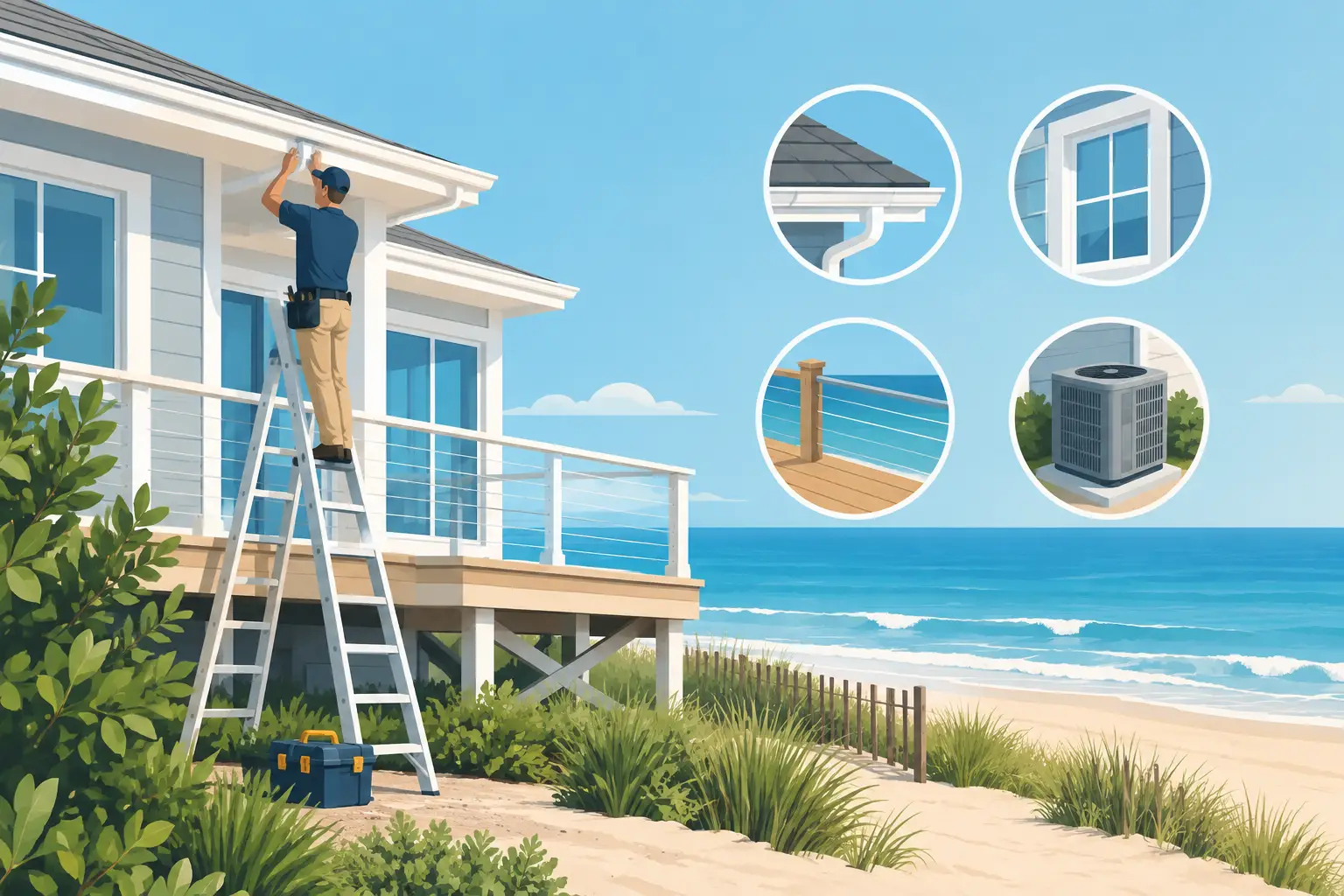
The exterior is the first line of defense, so it deserves regular attention. After periods of strong wind or rain, walk the property or have a trusted local manager do so. Look at roofs, gutters, drains, exterior walls, gates, railings, decks, and landscaping. A slow drain or loose roof tile may seem minor, but it can become a larger issue during the next heavy storm.
Rinse Salt From Vulnerable Surfaces
Fresh-water rinsing is one of the simplest and most useful habits near the coast. Railings, window frames, exterior light fixtures, outdoor showers, gates, and patio furniture benefit from a regular rinse. The right frequency depends on how close the house is to the water and how exposed it is to wind. A home directly facing the beach often needs more frequent attention than a property several blocks inland.
Use appropriate cleaners for the surface rather than harsh products that may strip protective coatings. Stainless steel, for example, is more resistant to corrosion than ordinary steel, but it is not immune to salt buildup. Wiping it dry after cleaning and addressing early discoloration can help preserve its finish.
Watch Drainage Before the Rainy Season
In coastal Mexico, heavy rain can arrive quickly. Before the wetter months, make sure roof drains, patio drains, gutters, and downspouts are clear. Water should move away from the home rather than collecting beside foundations, exterior walls, or pool equipment.
Pay attention to landscaping as well. Overgrown plants can block drainage paths, hold moisture against walls, and conceal pests. Healthy tropical landscaping is part of the appeal of a beach home, but it needs regular trimming and irrigation checks to stay an asset rather than a source of moisture problems.
Inspect Paint, Sealants, and Wood
Sun and salt gradually break down exterior paint and sealants around windows, doors, and fixtures. Cracked caulking can let water into places it does not belong, especially around sliding doors and windows exposed to rain. Re-sealing these areas at the first signs of wear is generally straightforward. Waiting until staining appears indoors is rarely the better choice.
Wood needs special consideration. Some species and finishes perform well in coastal conditions, while others require more frequent refinishing. Decks, pergolas, doors, and outdoor furniture should be checked for fading, soft spots, splitting, and insect activity. A protective finish applied on schedule can extend the life of these features substantially.
Protect the Systems That Keep the Home Comfortable
A beautiful view does not matter much if the air conditioning fails during a hot arrival day. Coastal air puts extra demand on mechanical systems, particularly condensers and other exterior equipment. Regular service by a qualified technician helps keep units efficient and identifies corrosion, drainage issues, and worn parts before they lead to a shutdown.
For homes that are vacant for extended periods, discuss the best settings for air conditioning and humidity control with a local professional. Turning every system completely off may save electricity in the short term, but it can allow moisture to build up inside. The right approach depends on the home’s ventilation, insulation, occupancy pattern, and furnishings.
Plumbing also deserves scheduled attention. Run water through sinks, showers, and toilets during inspections, check under cabinets for leaks, and look for signs of mineral buildup around fixtures. If the property has a pool, its pumps, filters, water level, and chemical balance need dependable oversight. Pool equipment is another area where salt and humidity can shorten component life.
Set a Schedule That Matches How You Use the Property
The most effective maintenance plan is one that people will actually follow. Rather than relying on an annual visit, organize care around monthly checks, seasonal preparation, and post-storm follow-up.
A monthly visit is often enough to identify leaks, odors, pest activity, tripped breakers, low pool water, or malfunctioning appliances in a vacant home. During the rainy season or after a tropical weather event, an additional inspection is wise. Rental homes may need more frequent checks because occupancy, staff turnover, and guest use add wear to locks, linens, appliances, outdoor areas, and pool systems.
Keep a written record of service visits, repairs, warranties, paint colors, equipment models, and contractor contacts. This makes decisions easier when you are away and adds credibility when it is time to sell. Prospective buyers appreciate a property that has been clearly cared for, especially when they are purchasing from another country.
Do Not Overlook Security and Guest Readiness
Maintenance and security overlap. Test exterior lighting, cameras, alarms, locks, gate motors, and backup batteries regularly. Salt air can affect electrical connections, and a gate that works inconsistently can create frustration for both owners and guests.
For vacation rentals, guest-ready maintenance also includes small details that shape the stay: clear pathways, secure handrails, functioning Wi-Fi equipment, clean outdoor cushions, reliable hot water, and a well-maintained kitchen. These are not merely hospitality concerns. They protect reviews, repeat bookings, and the property’s reputation.
If a home is used only occasionally, a local contact who can coordinate repairs and verify completed work is especially valuable. Photos are helpful, but an experienced person on site can notice whether a repair truly addresses the cause of a problem or only covers the visible symptom.
Know When to Repair and When to Upgrade
Not every worn item needs immediate replacement. A faded exterior finish may be cosmetic, while a compromised window seal or corroded electrical connection needs quicker action. The decision usually comes down to safety, prevention, operating cost, and the home’s intended use.
For example, replacing a frequently failing air conditioner with a more efficient unit may make sense for a high-occupancy rental. For a lightly used second home, regular servicing could be the more practical choice. Likewise, premium marine-grade hardware may cost more upfront, but it can be worthwhile on exposed gates, railings, and outdoor fixtures where replacement is difficult.
Local experience matters because materials that perform well in a dry inland climate may not hold up the same way near the ocean. Galván Real Estate and Services can help owners coordinate trusted property support that reflects the realities of coastal ownership and the expectations of guests.
A beachfront home should feel easy to arrive at, whether you are stepping in for a long weekend, welcoming renters, or preparing for a future sale. The best maintenance plan gives you that confidence: a cared-for home, a clear record of its condition, and fewer surprises between visits.