

How to Manage a Vacation Home Remotely Well
A vacation home should feel like a source of freedom, not a stream of late-night messages about a leaking pipe, a missed guest arrival, or a bill that needs immediate attention. Learning how to manage a vacation home remotely comes down to building reliable local support, setting clear standards, and having systems that let you see what is happening without trying to manage every small detail from another country.
For owners in Riviera Nayarit, the right approach also accounts for a coastal climate, seasonal occupancy, local service relationships, and the level of personal care guests or family members expect. A property can be beautifully furnished and well located, but it still needs consistent attention between visits.
Start With a Clear Remote Management Plan
Before selecting apps, cameras, or vendors, decide what you want the home to do. A residence used only by your family can be managed differently from a home that welcomes short-term renters throughout the year. Rental homes require guest communication, turnover coordination, pricing decisions, and a higher level of readiness. A private second home may place more emphasis on security, preventive maintenance, and preparing the property before each arrival.
Write down the decisions you want to retain as the owner and the decisions a local representative can make without waiting for approval. For example, you may want to approve repairs over a set dollar amount, while authorizing your property manager to handle routine plumbing, air conditioning, pool, landscaping, and housekeeping needs. This avoids delays when a small issue could become an expensive one.
Your plan should also state how often you want updates. Some owners prefer a concise monthly report with photos and expenses. Others want a message after every inspection, guest departure, or repair. More communication is not always better. The goal is useful visibility, not an inbox full of details that a trusted local team is better positioned to handle.
Build a Dependable Local Team
Remote ownership works best when one accountable person or company coordinates the people entering, servicing, and caring for the home. Rather than calling a cleaner, gardener, pool technician, and handyman separately from the United States, owners benefit from having a local point of contact who understands the property and can respond quickly.
A capable property manager should know the home’s systems, keep vendor schedules organized, inspect work after it is completed, and communicate in a way that is clear to an international owner. In a destination market, hospitality matters as much as maintenance. The person welcoming guests, checking a property after a storm, or arranging an urgent repair represents your home and your investment.
When evaluating support, ask practical questions. Who holds keys? Who is available outside normal business hours? How are repair estimates approved? Are inspection photos provided? What happens if guests arrive late, lose access, or report a problem? The answers reveal whether a service is designed for true remote ownership or simply occasional help.
For homes in coastal Mexico, local familiarity is especially valuable. Salt air, humidity, heavy rains, and periods of vacancy can affect paint, metal fixtures, drains, air conditioning equipment, roofs, pools, and outdoor furnishings. A team that notices early signs of wear can often prevent a manageable maintenance item from becoming a larger project.
Create a Home Operations Manual
Every vacation home needs a practical operating manual, even if it is never shared with guests. Keep it digitally accessible and update it whenever equipment, vendors, access codes, or household procedures change.
Include utility account information, appliance manuals, warranty details, preferred vendor contacts, Wi-Fi information, gate instructions, emergency contacts, and a simple map of shutoff valves and electrical panels. Add notes about the details that are easy to forget, such as how the pool equipment should be set, where extra linens are stored, which plants need special care, or how to reset the water heater.
For a rental property, prepare a separate guest guide that is warm, easy to understand, and specific to the home. It should cover arrival instructions, house rules, trash collection, parking, internet access, air conditioning use, and whom to contact for help. Guests appreciate a polished arrival, but they remember responsiveness when something does not go as planned.
Use Technology for Visibility, Not Constant Surveillance
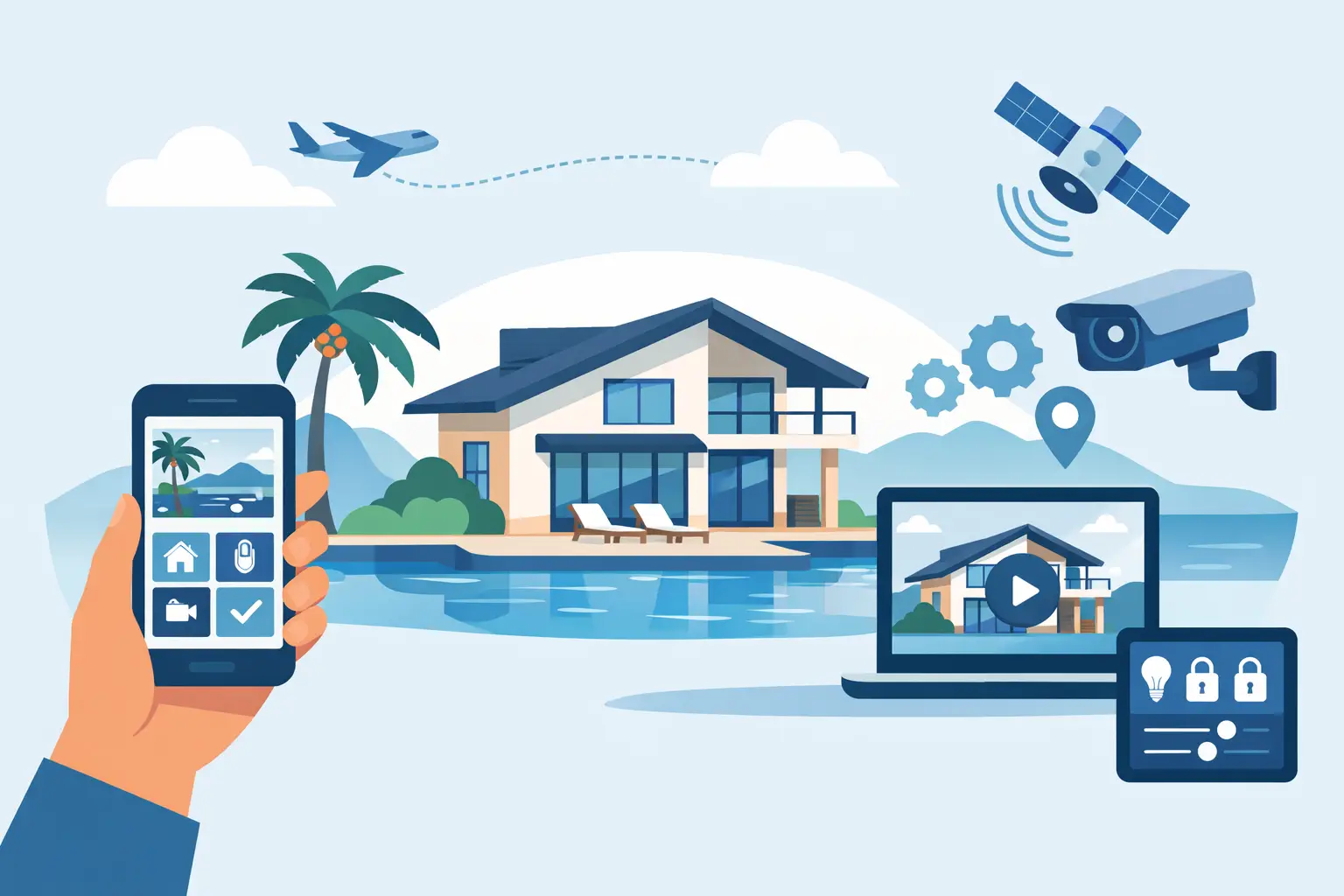
Smart technology can make remote management easier, particularly for access, energy use, and security. Smart locks can simplify arrivals and allow access codes to be changed between guests. Leak sensors can alert your team before water damage spreads. Wi-Fi-enabled thermostats, cameras at exterior entry points, and power monitoring may provide helpful oversight.
Still, technology is a tool, not a replacement for local care. Internet outages happen. Batteries fail. A camera can show that a gate is open, but it cannot close the gate or inspect why it stopped working. Choose devices that are simple for your local team to operate and make sure someone is responsible for checking them during inspections.
Be thoughtful about privacy as well. If the home is rented, clearly disclose permitted exterior security devices and avoid placing cameras in private areas. A respectful guest experience protects your reputation and encourages repeat stays.
Set a Maintenance Calendar That Matches the Property
The most effective remote owners plan maintenance instead of reacting to it. A calendar should cover recurring services such as cleaning, pool care, landscaping, pest control, air conditioning servicing, and exterior inspections. It should also include seasonal tasks, particularly before and after the rainy season.
In a coastal environment, regular checks of roofs, drainage, seals around windows and doors, outdoor furniture, and metal hardware are worthwhile. If the home sits vacant for part of the year, routine walk-throughs are essential. During each inspection, your manager should look for water intrusion, unusual odors, signs of pests, appliance problems, low supplies, and anything that could affect safety or comfort.
Keep a maintenance reserve in a dedicated account or budget category. The amount depends on the size, age, amenities, and rental activity of the home, but the principle is the same: routine repairs should not require a long international transfer or a stressful decision every time they arise. A reserve also gives your local team the ability to address approved, time-sensitive issues promptly.
Keep Financial Records Simple and Transparent
Remote ownership becomes far less stressful when every expense has a clear purpose and supporting documentation. Ask for regular statements that separate recurring operating costs from repairs, improvements, and guest-related expenses. Receipts, invoices, photos, and short descriptions provide useful context, especially when you cannot inspect work in person.
If your home is a rental, track income, occupancy, cleaning costs, commissions, utilities, and maintenance separately. This makes it easier to understand actual performance rather than relying on rental revenue alone. A busy calendar can still produce disappointing returns if operating costs are not being monitored.
Cross-border ownership can involve different payment practices, service contracts, tax obligations, and insurance requirements than those in the United States. Work with qualified local and cross-border professionals who can advise you based on your ownership structure and intended property use. Good records make those conversations more productive and help prevent surprises.
Protect the Guest Experience When You Rent
Guests do not distinguish between a problem caused by a vendor, a power fluctuation, or an overlooked supply order. They simply experience the home. That is why a rental property needs a consistent standard for cleanliness, working amenities, fresh linens, stocked essentials, and quick responses.
Establish a detailed turnover checklist for every departure. It should include an inspection of air conditioning, Wi-Fi, appliances, pool areas, outdoor lighting, keys, remotes, and inventory. A post-departure photo record can be useful for confirming condition and identifying damage before the next arrival.
The trade-off is that premium service costs more. A thorough inspection, quality housekeeping, and on-call guest support require coordination and professional staff. For many owners, those costs are justified by stronger reviews, fewer emergencies, better property preservation, and the confidence that guests are being welcomed with genuine care.
Visit With Purpose
Even the best remote management arrangement benefits from an owner visit. Use your time at the home to review improvements, refresh furnishings, test the guest experience, and meet the people responsible for the property. Walk through the home as if you were arriving for the first time: Is the lighting comfortable? Are outdoor spaces inviting? Does everything function as expected?
A visit is also an opportunity to adjust priorities. Perhaps rental demand supports an upgrade, or perhaps the home would be easier to maintain with more durable furniture and simpler landscaping. Remote management is not static. The best plans evolve with the property, your lifestyle, and the local market.
The real comfort of a vacation home comes from knowing there is someone nearby who treats it with the same care you would. With clear expectations, regular oversight, and experienced local representation, you can spend less time managing from afar and more time looking forward to your next stay in paradise.